Monday, May 21, 2012

Catering 1 Final


EIN DEUTSCHES ABENDESSEN

- :: fine German cuisine :: -


picture courtesy of My Opera.
_______________________

APPETIZER
warm spinach dip & chips a warm, creamy spinach
dip spiced with nutmeg and bacon - 4

SOUP
vegetable & dumpling a light and tasty soup full of
veggies and carrot dumplings - 4

MAIN DISH
sausage & sauerkraut a tasty combination of
famous German sauerkraut and sausage with
sauteed onions and potatoes - 6
_______________________

SPINACH DIP (recipe courtesy of tasteofhome.com)
Ingredients
2 packages (10 ounces each) frozen chopped spinach  $2.70
1 large onion, chopped $1.002 garlic cloves, minced $0.25
2 tablespoons butter $0.40
6 bacon strips, cooked and crumbled $2.50
1/2 teaspoon ground nutmeg $0.15
1/2 teaspoon salt $0.05
Pepper to taste

DIRECTIONS
Cook spinach according to package directions. Drain well and set aside. In a large skillet, saute onion and garlic in butter until tender. Stir in the spinach, bacon, nutmeg, salt and pepper; heat through.


VEGETABLE AND DUMPLING SOUP (recipe courtesy of tasteofhome.com)
Ingredients
1-1/2 cups chopped onions $0.75
4 medium carrots, sliced $1.50
3 celery ribs, sliced $0.80
2 tablespoons canola oil $0.20
3 cups vegetable brothm $0.75
4 medium potatoes, peeled and sliced $1.25
4 medium tomatoes, chopped $2.50
2 garlic cloves, minced $0.25
1/2 teaspoon salt $0.05
1/2 teaspoon pepper $0.12
1/4 cup all-purpose flour $0.20
1/2 cup water
1 cup chopped cabbage $0.70
1 cup frozen peas $0.40


Carrot Dumplings
2-1/4 cups reduced-fat biscuit/baking mix $0.85
1 cup shredded carrots $0.50
1 tablespoon minced fresh parsley $0.50
1 cup cold water
10 tablespoons shredded reduced-fat cheddar cheese $0.35

DIRECTIONS
In a Dutch oven, cook the onions, carrots and celery in oil for 6-8 minutes or until crisp-tender. Stir in the broth, potatoes, tomatoes, garlic, salt and pepper. Bring to a boil. Reduce heat; cover and simmer for 15-20 minutes or until vegetables are tender.

In a small bowl, combine flour and water until smooth; stir into vegetable mixture. Bring to a boil; cook and stir for 2 minutes or until thickened. Stir in cabbage and peas.

For dumplings, in a small bowl, combine baking mix, carrots and parsley. Stir in water until moistened. Drop in 10 mounds onto simmering soup. Cover and simmer for 15 minutes or until a toothpick inserted in a dumpling comes out clean (do not lift cover while simmering). Garnish with cheese.


SAUSAGE AND SAUERKRAUT (recipe courtesy of tasteofhome.com)
Ingredients
4 medium potatoes, peeled and cubed $1.00
2 tablespoons canola oil $0.20
1 small onion, halved and sliced $0.75
1 pound smoked sausage, cut into 1/4-inch pieces $4.50
1 package (16 ounces) sauerkraut, rinsed and well drained $2.50
1/4 teaspoon pepper $0.05
1/8 teaspoon salt $0.05

DIRECTIONS
In a large skillet, saute the potatoes in oil for 5-6 minutes or until lightly browned. Stir in onion; saute for 3-4 minutes or until tender. Add the sausage, sauerkraut, pepper and salt. Cook, uncovered, over medium heat for 4-5 minutes or until heated through, stirring occasionally.


Rubric and Self Evaluation for: Josephine M. Loetz
Possible PointsSelf EvaluationTeachers ScoreComments
Part 1
Deep Cleaning10095
Part 210
Theme FollowedGerman food
Presentation and Decoration15N/A
Actual Dish50
Blog Post:
  • fixed menu
  • cost of menu recipes
  • Self Evaluation

80

50

20
70
40
20
Clean up
25N/A
Total350


Monday, April 30, 2012

Beef

Roasting peppers is very easy- all you need to do is turn your broiler on and put your peppers on a baking sheet. With some tongs, turn the peppers so that they char evenly over 75 to 80% of the skin. Roasting peppers gives them a nice earthy flavor. Roasted peppers can be used in many recipes, including sauces (like the sauce we used for our shish kebabs), hummus, as well as being used for stuffing with chicken or other meats.

Beef is very high in protein, B-vitamins, and iron. Proteins are made up of amino acids, nine of which are essential (meaning we must find them in food). Proteins contain all nine of these amino acids. These complete proteins found in beef help repair the body, form hormones and enzymes, and helps to build an immune system. B-Vitamins help to improve cognitive performance. There are quite a large amonut of B-Vitamins in beef, including B3, which promotes gealthy skin and nerves as well as aids digestion; B6, which helps the body make nonessential amino acids as well as help form red blood cells; B12 is found naturally only in animal foods and is needed for the proper functioning of body cells and the nervous system. The body needs iron to help red blood cells carry oxygen. The body can easily use heme, the kind of iron found in beef. Heme also helps the body use non-heme iron which can be found in beans, grains, and vegetables.

We used a sirloin to make our shish kebabs. This cut works well for grilling and broiling because it is a more tender cut of meat, so it doesn't have as many muscle tissues that need to be broken down by slow cooking methods. In other words, dry heat cooking methods are great ways to cook mote tender cuts of meat, and slow cooking methods are the best way to cook locomotive muscles.

The three grades of beef are prime, choice, and select. Prime beef has the most marbling, or fat that helps a cut of beef stay juicy and flavorful. It is usually not found in supermarkets, but instead in nice restaurants or very select beef stores. The cost for prime beef can be very high because it is not widely produced. Choice beef has less marbling than prime, but enough to keep the mean juicy and flavorful. Generally it doesn't cost as much as prime beef. Select beef is very lean, which means that there isn't much marbling. It is much cheaper than both choice and prime beefs, but it is also less juicy and flavorful.

Grass fed cattle are eating natural food- what nature has to give them, occasionally with some supliments. They aren't eating foods that may contain pesticides, and grass fed cows aren't given anything to help stimulate their growth. Because these cows eat grass, their meats contain omega 3 acids, just like fish. Grain fed cows are given hormones to stimulate growth, and the food that they are given isn't really high quality. These cows also aren't usually in very good living conditions. A grass fed cow is a happy cow, but a grain-fed cow isn't really very happy at all.

To cook less tender meat, you can braise it or cook it in liquid. To braise beef, slowly brown it on all sides with a small amount of oil. Eventually you'll add 1/2 to 2 cups of liquid, and then cover the beef and let it simmer until the beef becomes tender. To cook beef in liquid, gently brown it, cover the beef in liquid, and then let it simmer until it's tender.

Monday, April 23, 2012

Quisadillas & Other Things


Cheesy quesadillas. Image from examiner.com; I forgot to
take a picture of my quesadillas, unfortunately.

Tortillas are super easy to make. Not a lot of ingredients need to go into them, except for flour and some levening agents as well as something fatty like Crisco, as well as water. All of the dry ingredients (plus the Crisco) need to be mixed together, and then water will be added last. In order to make a good tortilla, you have to be sure that the ingredients are mixed together very well. When you roll them out after, they need to be rolled out very thin because they double in thickness when they're put on a skillet. Here is the very recipe that we were provided with in class, as well as some background information on tortillas and different kinds of breads from around the world.

Tenderizing chicken, and other kinds of meat, is a smart idea if you're planning on cooking a tougher piece of meat. All the meats we eat are muscle tissue, and the least expensive meats come from parts of animals that are often used- more tender cuts of meat come from parts of the body that aren't used often. To make these tougher cuts of meat more tender, pound on them! Tenderizing them breaks up the muscles fibers a little bit, making the meat "softer." Esthetically, it also makes the cut of meat seem bigger than it really is.


The parmesan chicken with pesto noodles that I made.
 
Pesto sauce is traditionally made with basil and pine nuts (here is a recipe to a traditional pesto sauce). We made our pesto sauce with peas and walnuts, as well as several other ingredients. Pesto sauce is very easy to make. All it takes is a food processor. Put the garlic, peas, and other dry ingredients inside and "process" them until they're well mixed and there isn't any large chunks left. After that, put in the oil slowly and mix it in. Lastly, put in the parmesan cheese.

Kings of Pastry was about a group of men who were entering a competition in France to obtain a special collar. This collar means that they are a MOF, or a meillure ouevre de france. Essentially, they gain the title of a "master chef." It is a very high honor if one manages to obtain it. The film followed the preparation for the MOF as well as the competition.

I didn't have any opinion on pastry chefs before the film, and I still really don't either. I'm not a fan of making pastries myself, or of baking in general, so I admire those who can. . . however, it seemed that in the film those men were making many things that I would not consider a pastry, or really related to pastries. But I suppose someone in the culinary world has to know how to make lollipops and whatnot.

Friday, April 6, 2012

Eggs and Fried Rice

It would be a good idea to learn how to cook eggs properly since (I think so, anyway) they're a staple of the American breakfast, and of breakfasts from most other places. Like other foods, eggs can contain salmonella and other diseases or sicknesses that could make you or the person eating them sick.  It wouldn't be very fun to cook breakfast for your mom or someone in an effort to be to be nice and accidentally make that person sick. Eggs are also very versatile too, though, so knowing all the different ways to cook and use them would also be a fun learning experience.


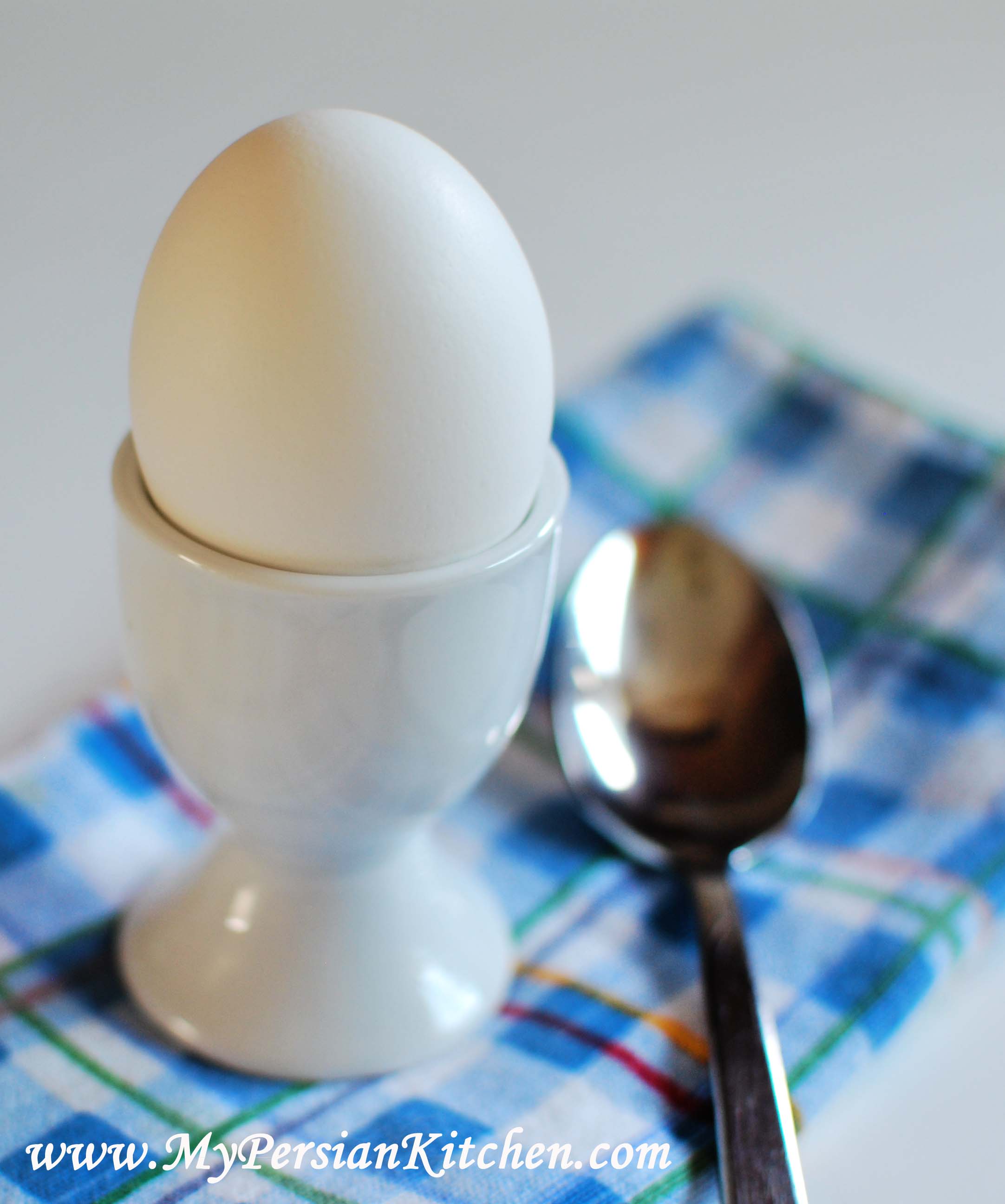
A hard boiled egg. Picture from MyPersianKitchen.com

In the kitchen yesterday, we learned how to cook eggs four different ways: fried, hard boiled, scrambled, and poached. You can eat these eggs in a variety of different ways. Personally, I always eat my fried egg on toast. I think it's really great on lightly toasted bread with maybe a little bit of butter or jelly. Other people eat them with sausages or bacon or just by themselves, which is also how some people eat their scrambled eggs. Scrambled eggs can be used in several other dishes too though, such as the fried rice that we made yesterady. Poached eggs are used in making eggs benedict (which is something that my grandma happens to love). Eggs benedict is sort of like an egg McMuffin, only I imagine that it is much less nasty than what McDonald's would serve you, haha. It's made of maybe an English muffin, sausage, and a poached egg. Hollandaise sauce is added to it for some extra flavor. Hollandaise sauce is egg a mix of egg yolk and butter and is seasoned with white or cayenne pepper. (Hollandaise sauce information from here.) At home, my family uses hard boiled eggs in salads or we'll just eat them by themselves at breakfast. In Germany, they love eating hard boiled eggs for breakfast. Every house has special tiny cups for holding their eggs. They're usually eaten with bread, cheese, and sliced deli meat, which is a typical German breakfast.

Below are pictures of the three other kinds of eggs that we made. . .
A fried egg on toast. Picture from dashrecipes.com


A pair of poached eggs. Picture from the-foodist.com

Scrambled eggs. Picture stock  from despositphotos.com


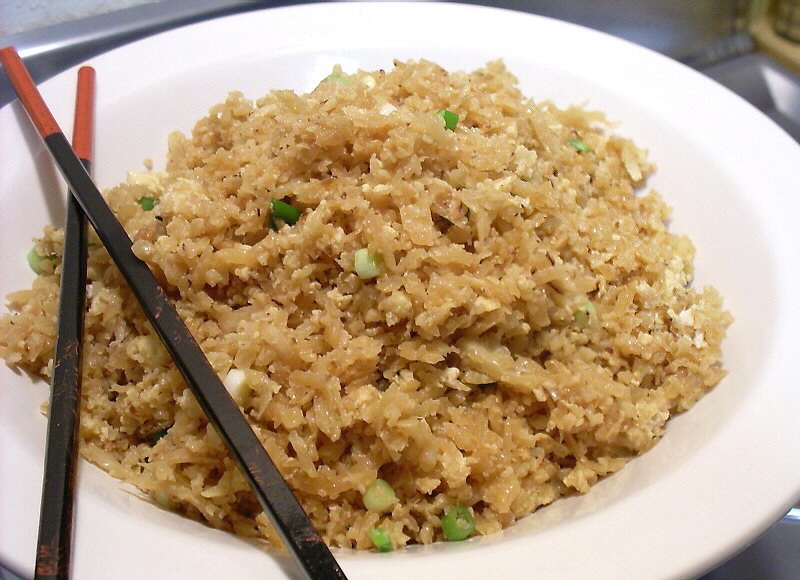
Fried rice. Picture from genaw.com

Fried rice is very simple and very cheap to make. Your rice must always be precooked before you start adding in all of your goodies, so that's the first step in making the dish. You can use white or brown rice to make the recipe. After making your rice, set it aside and heat up a skillet. You'll need to add a little bit of oil, and then once it's warm enough add in your chopped onions and garlic. Now would also be the time to add in any vegetables you'd like, like carrots, peas, broccoli, etc. After that, add the rice and pour some soy sauce in, being careful not to add too much. Stir it up until the soy sauce has coated everything and your veggies have gotten soft, and then you're done! If you would like to add in some precooked meat, like chicken or beef, now would be the time to do that as well.

Here is a recipe for fried rice with duck and plum sauce that sounds absolutely delicious! Sadly, I don't even know where to buy duck around here except for at the Pacific Ocean Market, and going in there makes me feel a little bit squeamish. . . so the chances of me trying this any time soon are slim. But I can still dream, right?

Monday, March 19, 2012

Scones, Fruit Salad, Toad in the Hole

This week, I don't think that the group did as well as it did in the past. We were a bit more unorganized than usual, and some people seemed to be a little testy. I'll attribute that to CSAPs. Other than that, though, we got the job done and the experience wasn't horrible. It just wasn't as smooth as before.

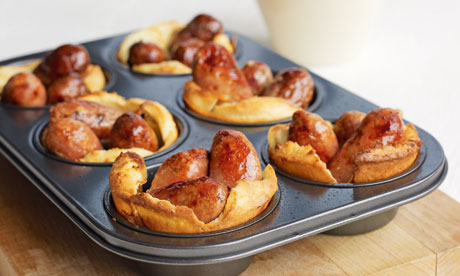
Well, our toad in the hole didn't look quite as it was supposed to since we have a vegetarian in our group- so we couldn't put the sausage in the batter like you are supposed to. However, compared to a regular pancake, it seemed to be much thicker and perhaps not as airy. It also bubbled a bit, sort of like the crust on a good pizza. That doesn't happen to most pancakes, but maybe that's because you don't usually bake pancakes in the oven like you do with toad in the hole. I didn't eat any because I wasn't hungry that day, but everyone in the group who had some said that it was very good. I've personally never been a fan of pancakes, but maybe I'd like this. I'll have to try it again sometime. I'm also not much of a "breakfast food" person in general (just yesterday I had lentil soup for breakfast, haha), so I can't say I have a very educated opinion on this food as a breakfast item.

Here is a link to a Toad in the Hole recipe, courtesy of the Food Network.


My group did not substitute milk for orange juice when making the scones, just saying. You could probably substitute milk with just about anything of a similar viscosity and texture, like other kinds of juices. You might even be able to substitute it with different kinds of coffee, and probably even with hot chocolate or something like it.

For our cantaloup salad, we tried to stack it a little bit. It had been cut into generally uniform squares, so we used that to our advantage. We placed a few leaves off to one side for some decoration, and Kady put a piece of cantaloup right in the middle of our seedless jalapeno pepper, hahaha. It looked pretty nice, overall. It could have been worse. It's not the way I would have plated it exactly, but with what we had available at the time it was alright. I'm not complaining.

I know I should say that I enjoyed meeting new people and making friends or something lame like that, but, I don't exactly feel that way. I like my kitchen group well enough, haha, that's it. I have enjoyed cooking, but I seem to get stuck doing a lot of the dirty stuff. I've learned some new recipes that I would very much like to try again. I've also made myself learn to love to do dishes, haha. I don't know what to tell you. I don't hate this class, but I don't usually look forward to it. But if it makes you feel any better, I don't look forward to any of my classes, hah. In general, though, I think that this class has made me a better cook. I don't get to cook a lot at home because my dad likes to pretend that he's good at it, so this has kept me in practice.

Tuesday, March 6, 2012

Guineafowl

The guineafowl is a bird native to Africa, and is closely related to the chicken. There are several different kinds of guineafowl, and this bird has been a food item ever since the ancient Egyptians were around. 

Guineafowl can be a substitute for chicken and seems to be a very versatile meat which tastes good cooked simply or with heftier side dishes, like sausages and beans. Salads also compliment the bird well. I thought that this recipe sounded rather delicious. There is no one way to cook the guineafowl.  It is generally the "main course" of a meal. Its flavor is slightly gamey, but is much more subtle than pheasant and other wild birds.Their eggs can also be eaten just like chicken or goose eggs.

Because guineafowl is very similar to chicken, it can be cooked in just about every way that a chicken can. However, it also means that this bird can dry out if you don't cook it properly, so cooking it in a manner that helps preserve the moisture in it is most wise.

Since the guineafowl are a living thing, they are raised like chickens and other animals that humans eat. France, Belgium, and Italy are the largest produces of guineafowl. They can be raised free-range or in cages like chickens, but it is recommended that, when buying guineafowl, that you buy free-range guineafowl.While being raised they can eat generic commercial bird feed, or they can eat lice, worms, ants, spiders, and ticks if they are raised free-range.

The common guineafowl is (meleagris) named after a prince of Macedon in Greek mythology. Meleager, the prince, killed all of his uncles. He was then killed by his mother. For some strange reason, Meleager's sisters were turned into guinea-hens. As they cry, their tears form the pearl-shaped markings on the common guineafowl's face.

Here are two other recipes which can be used for cooking guineafowl.

Friday, March 2, 2012

Pie & Spaetzle

When you're making pie dough, it's important that you keep the dough as cold as possible and that you touch it as little as you can. If you want your pie to come out flaky, then it's also important that you leave pretty big pieces of butter in it for when it goes into the oven. In order to do this, you have to "cut" the butter into the dough, which means you cover it in flower and sort of stretch it out with your fingers into longer pieces. When the butter melts in the oven, it creates flakes because the butter is gone from the place where it was, and steam fills up those little pockets. When the pie crust comes out of the oven, it deflates like the cream puffs did, and then you've got your flakes.

This recipe can be found at allrecipes.com.

Ingredients

  • 1 1/4 cups all-purpose flour
  • 1/4 teaspoon salt
  • 1/2 cup butter, chilled and diced
  • 1/4 cup ice water

Directions

  1. In a large bowl, combine flour and salt. Cut in butter until mixture resembles coarse crumbs. Stir in water, a tablespoon at a time, until mixture forms a ball. Wrap in plastic and refrigerate for 4 hours or overnight.
  2. Roll dough out to fit a 9 inch pie plate. Place crust in pie plate. Press the dough evenly into the bottom and sides of the pie plate.


Spaetzle is are German dumplings. They're basically little bready noodles. If you make them too thick then they're no good to eat. You can add other things to spaetzle, like peppers and onions, cheese, etc. It doesn't  look too good, in my opinion, but it really just looks like a bunch of short and thickish noodles mixed in with whatever else you might have added to it. We shaped our spaetzle using a colander. If you pile the dough at the bottom of the colander and push it through into boiling water, then you've got your spaetzle! However, there are also more traditional spaetzle makers, and you can also make it using a knife and cutting board, but that's a pain in everyone's behind.

This recipe can also be found at allrecipes.com.

Ingredients

  • 1 cup all-purpose flour
  • 1/4 cup milk
  • 2 eggs
  • 1/2 teaspoon ground nutmeg
  • 1 pinch freshly ground white pepper
  • 1/2 teaspoon salt
  • 1 gallon hot water
  • 2 tablespoons butter
  • 2 tablespoons chopped fresh parsley

Directions

  1. Mix together flour, salt, white pepper, and nutmeg. Beat eggs well, and add alternately with the milk to the dry ingredients. Mix until smooth.
  2. Press dough through spaetzle maker, or a large holed sieve or metal grater.
  3. Drop a few at a time into simmering liquid. Cook 5 to 8 minutes. Drain well.
  4. Saute cooked spaetzle in butter or margarine. Sprinkle chopped fresh parsley on top, and serve.  
 
A galette is an old-fashioned pie with a hole in the top and all of the innards piled in the middle of it. I did not like or dislike it more than a regular apple pie. 
I think that my group is getting much more efficient. I am no longer the one always washing dishes, and I think the other girls are gradually becoming more considerate of me. This week, I don't have anything to complain about. Big surprise, right?

Friday, February 17, 2012

Cream Puffs

The only things needed to make cream puffs are butter, water, flour, sugar, and eggs. Salt is not required, but we added it to our dough. When the cream puffs are put in the oven, the water turns to steam and acts as a leavener and causes the puff to rise a little bit, although it collapses after you pull them out of the oven.

Cream puff dough is very sensitive- it is very important that you do not add too much egg to the dough. Although it can be fixed, it's a hassle. The proper way to check if the dough has enough eggs is to take a bit more than a pinch of the dough between your thumb and index finger, press down on it, and then slowly pull your fingers away from one another. You should be able to extend your fingers pretty far from each other before the dough will "break," or the dough separates in the middle. If you can't get your fingers far from each other without the dough breaking, then you don't have enough egg in it. 

Cream puffs are kind of tricky to make if you don't have some help. Unlike a lot of other doughs, you make it first on the stove top by combining butter and water, and then eventually adding flour. The ingredients will form a ball, and once that happens you'll need to transfer the dough to a mixing bowl and add in your eggs. Once you've tested your dough and it's at the proper strength and consistency, you'll make your puffs and put them on a baking sheet. You bake them until they're golden brown on the top. After that, you'll stuff them with your cream, either by poking a hole in the bottom and filling it, or by breaking it in half and putting the cream in the middle, like you would a sandwich. It is very important that you aren't the only one making these- or rather, it's much easier if you have help. As I said earlier, adding eggs to your dough can get kind of tricky, so do it slowly so you don't add too much. Also, once your puffs are in the oven, don't open the oven to look at them! All the steam in the oven will escape, and the puffs will fall flat. 

The temperature of your oven must be above 212 degrees Fahrenheit, otherwise your water won't turn to steam, and your cream puffs won't rise. We set our oven at 450 degrees.

If you were eating a cream puff at a fancy restaurant, if they gave you a bigger one (bigger than the ones we made), they might put it off to one side on a square plate, and maybe drizzle some chocolate or something else over the top of it, and maybe add some on the empty side of the plate. They could add some fruit on top, and maybe put a mint leaf on the side. If it was a smaller cream puff and there was more than one, perhaps they would lay them out in a line with different fruits on each one. Maybe each one would be a different flavored cream puff as well. . . either way, they would add a little bit of height to the cream puff and would also add some color, like drizzling, fruit, or mint leaves. The fruit, if they did add any, would also provide a different texture from both the cream and the puff.

Recipe can also be found here, courtesy of the Food Network.

Ingredients

  • 6 tablespoons (3 ounces) unsalted butter
  • 3/4 cup water
  • 1 cup all purpose flour
  • 1/8 teaspoon salt
  • 1 teaspoon sugar
  • 4 eggs

Directions

1. Preheat oven to 450 degrees. In 2 quart pot, combine the butter and water. On a piece of wax or parchment paper, sift together the flour, salt and sugar. Bring the water and butter to a rolling boil, remove from heat and dump the flour mixture in all at once. Stir with a wooden spoon or paddle to incorporate.
Return the saucepot to high heat and cook, stirring, for about one minute. The mixture will form a ball and coat the pan with a thin film.
2. Transfer the mixture to a mixing bowl or standing mixer equipped with the paddle attachment. Mix the dough for a minute or so, on low speed, to release some of the heat. Add the eggs, one at a time, completely incorporating each one before adding the next. Beat until the dough gets thick and ribbony.
3. Fit a pastry bag with a round #5 tip and fill with the warm dough. Line a heavy cookie sheet with parchment paper and anchor it to the tray with a little dab of the dough at each corner. Pipe about forty to forty five 1 1/2-inch mounds about 2 inches apart on a cookie sheet lined with parchment paper. Bake for 10 to 15 minutes, until golden and puffed. Reduce heat to 350 degrees and bake for another 10 minutes or until they are golden brown and there are no droplets of moisture in the crevices. Turn off oven and leave the choux to dry for another 10 minutes. Use when cool, or freeze, wrapped in a plastic bag, for 2-3 months.


Cream puff cream is mostly milk, sugar, egg, and flour. To make it, first the milk and sugar must be put in a pot and boiled. Before your milk boils, whisk your eggs, flour, and other ingredients together. Once the milk begins to boil, you slowly add in your egg yolks, beating the mixture quickly so that your eggs don't cook and get all scrambled- that wouldn't be any good. Keep stirring it and eventually the cream will thicken and turn into cream. Although the cream isn't hard to make in general, adding in the egg part without it scrambling might be a challenge, so I strongly suggest having someone else pour it in while you stir the cream very quickly to prevent that from happening. After your cream has thickened, put it in a bowl and cover it in saran wrap with some holes poked in it so that the cream can chill and can be added to your cream puffs. Another tip would be to maybe make your cream before you make the puffs, because when we made ours our cream hadn't cooled down too much and so it was a little bit too runny. It's like pudding, and needs to cool down before it can get to the proper consistency. Lastly, I would suggest breaking the cream puff in half and filling them up with cream rather than trying to fill them up through the bottom. It's easy to break your cream puffs if you try filling them up through the bottom.


This recipe can also be found here, courtesy of allrecipes.com
Ingredients:
2 cups milk
1/2 cup white sugar
1 vanilla bean, halved lengthwise
6 egg yolks
4 tablespoons all-purpose flour
4 tablespoons unsalted butter
1 pinch salt
Directions:
1. Place the milk, half the sugar and the vanilla bean in a saucepan over medium heat.
2. Combine the egg yolks and the remaining sugar in a bowl and whisk until light in color. Add in the flour and the salt, mix to combine.
3. When the milk just begins to boil, remove from heat and remove vanilla bean. Very slowly dribble the hot milk into the yolk mixture, stirring all the time. When about half of the milk has been added, place all of the yolk mixture into the saucepan over medium heat. Using a spatula or a whisk, mix the pastry cream as it heats, making sure to reach all of the corners of the pan when you stir. Bring the mixture to a boil. Let boil for about 1 minute, stirring constantly. The mixture will be thick.
4. Remove from heat and add the butter. Strain if you wish for a smoother cream. Place into a bowl and cover directly with plastic wrap to stop a skin from forming on the cream. Chill and use within a few days.

Tuesday, February 7, 2012

Chicken Noodle & Potato Soup (plus a snow day)

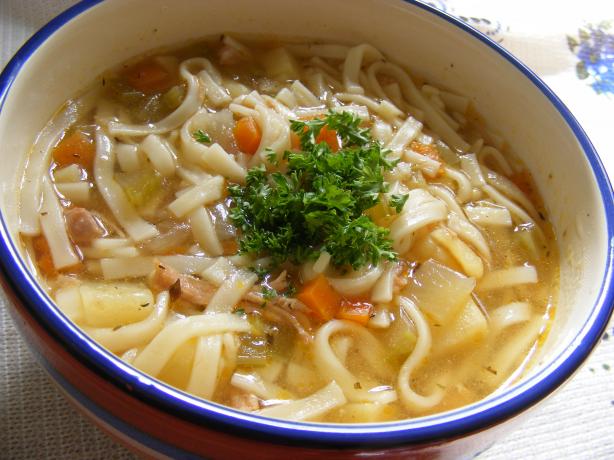
Mirepoix is made of carrots, onions, and celery. These are boiled in water as part of a stock for soups. We used mirepoix along with chicken to make the stock for our chicken noodle soup. When the stock is done being cocked, the veggies are thrown out and new ones are added in for the rest of the soup.

I did not think that making the soup was very difficult. For the first part, all we had to do was put our chicken and mirepoix (chopped veggies) in water for a while. After the stock was done, the chicken was separated from the vegetables and added back into the stock along with some fresh carrots, celery, and onions. Making the noodles was more difficult, because they had to be very thin before we could cut them up and add them to the soup. I think ours were too thick, because they absorbed all of the stock and we didn't really have soup so much as noodles with pieces of chicken and vegetables.

For our potato soup, before we could blend it we had to make sure that the potatoes (and onions) were soft. I checked to make sure they were soft my squishing several of the chunks with a fork. If you don't have to press hard into the potato for it to turn to mush, then it is soft enough to mash up (easily, anyway). If the potatoes weren't soft, it would have been really hard to blend them up and the soup probably would have been pretty chunky.

I'm very comfortable in the kitchen for the most part. There are still some things that I don't know the location of, but I'll figure it all out in time; I'm not worried about it. I've always kind of had a fear of knives, but this class is just making me suck it up and deal with it, haha. I think that things have improved a little bit since last week as well, with the group being a bit more informed of what everyone else is doing and helping more with cleaning things up.

I've always loved cooking and I've cooked things at home and at my grandma's house before taking this class. I have wanted to try some of the things we've made in this class at home, though, however my mom just looks at me in an exasperated manner and says, "That sounds like it will be a mess." Which is basically her way of saying "no," so I actually haven't done much cooking at home since taking this class. Sad face, I know.

Tuesday, January 31, 2012

Yeast

Eggs are important in baking because they help add structure to the doughs that they are being used in. If eggs weren't added to our pretzel or cinnamon roll doughs, there wouldn't have been much to help bond all of the ingredients together.

Yeast is a living organism which is activated by warm water. It eats the sugars in the bread dough and produces CO2 gas, which causes the bread dough to rise. Without yeast or any other kind of leveners, a baked bread will turn out flat.

I feel that the cinnamon rolls required a lot more work to make. They needed to be rolled out, covered in butter and cinnamon, rolled back up, and then cut up into a bunch of pieces and shaped if they turned out weird. With pretzels, we just had to make the dough, roll it out, and shape it into a pretzel. With cinnamon rolls, the flavor was added to the dough (in the form of cinnamon) before it was baked, therefore getting baked into the dough. My group put cinnamon and cheese on top of the pretzels, so those things weren't baked into the food. In terms of what was actually put into the dough, we didn't use any eggs to make the pretzels.

A good dough will not be sticky. If you put it on a dry surface and start kneading it, you shouldn't need any flour, because it won't stick to the surface. Your dough is too wet if it sticks to surfaces (like a rolling pin, in example), and too dry if it begins to crumble.

My team absolutely sucks at cleaning as a group effort. I've gotten stuck with doing a lot of it while everyone else stands around talking to you, Mr. Stutzman. Once I'm done, I'm usually the one who ends up drying it off, too. It's really frustrating me, and I don't appreciate getting stuck with doing all of the cleaning. I wouldn't mind so much if it was the only thing that I did in the kitchen, but it's not. A lot of time is also wasted, I think, because no one seems to know what someone else is doing. One person could be headed to go get the flour, but someone's already got it. We're not on the same page most of the time. There's generally a few of us standing around doing nothing at any given time, too.

The pretzels were really awesome, though. I wish we could have left them in the oven a bit longer so that they would have been more brown and hard on the outside, like a German pretzel. I miss eating them for breakfast!

Tuesday, January 24, 2012

Crepes & Zucchini Carrot Bread


Leaveners make the dough or batter rise. Without leaveners, breads would all be flat. There would be no air pockets to make your bread fluffy. Different kinds of leaveners include flour, baking soda, baking powder, and (I assume) yeast.

Making crepes is pretty simple. They are like pancakes except "flat"- they do not rise like pancakes do, so they are not as fluffy or filling. Instead of putting things on top of a crepe like you do a pancake, you put things inside of it instead. All you need is to prepare a thin batter is flour, eggs, and a few other things like salt. Heat up a pan and after it's warm pour some of the batter into it. Once it's mostly cooked through you can flip the crepe and in a few moments it's done.

For our filling we decided to make caramelized apples, which are also pretty simple to prepare. All it takes is some melted sugar and butter. You mix in the apples until they turn golden brown- the trickiest part is just keeping the sugar from burning!

Here's the recipe from allrecipes.com. . .
Ingredients
  • 1 cup all-purpose flour
  • 2 eggs
  • 1/2 cup milk
  • 1/2 cup water
  • 1/4 teaspoon salt
  • 2 tablespoons butter, melted

Directions

  1. In a large mixing bowl, whisk together the flour and the eggs. Gradually add in the milk and water, stirring to combine. Add the salt and butter; beat until smooth.
  2. Heat a lightly oiled griddle or frying pan over medium high heat. Pour or scoop the batter onto the griddle, using approximately 1/4 cup for each crepe. Tilt the pan with a circular motion so that the batter coats the surface evenly.
  3. Cook the crepe for about 2 minutes, until the bottom is light brown. Loosen with a spatula, turn and cook the other side. Serve hot. 
Sadly, our zucchini carrot bread was not as delicious as this specimen looks. It probably would have been much better if the butter we had available didn't taste so strange. Sugar and cinnamon really helped. But none the less, I digress. . .
This was probably the "biggest" recipe we've had so far. There were a lot of little things needed to make it, so there was a lot of running around. The biggest issue was probably grating the carrots and zucchini, though. If we make it too small it just turned into mush, but we didn't want it to be too big either, otherwise it would make for an unpleasant experience to bite into a giant chunk of carrot or zucchini whilst eating this bread. Eventually we found a good groove for grating it, though, and it turned out well enough. 
Here is the recipe for the zucchini carrot bread from allrecipes.com (we halved it, though). . .

Ingredients

  • 3 1/2 cups all-purpose flour
  • 1 tablespoon baking powder
  • 1 teaspoon baking soda
  • 1/2 teaspoon salt
  • 1 teaspoon ground cinnamon
  • 2 eggs, lightly beaten
  • 1 1/2 cups buttermilk
  • 2 tablespoons butter, melted
  • 1/2 cup packed brown sugar
  • 1 cup shredded zucchini
  • 1 cup shredded carrot
  • orange, zested
  • lemon, zested
  • 1/2 cup chopped walnuts

Directions

  1. Preheat oven to 350 degrees F (175 degrees C). Grease two 9x5-inch loaf pans. Sift together the flour, baking powder, baking soda, salt, and cinnamon; set aside.
  2. Combine the eggs, buttermilk, and melted butter in a mixing bowl. Stir in the brown sugar. Add the zucchini, carrots, and orange and lemon zests.
  3. Stir the dry ingredients to the wet ingredients and stir gently until just combined. Fold in the walnuts.
  4. Pour batter into prepared loaf pans. Bake at 350 degrees F (175 degrees C) for 60 to 75 minutes, or until a toothpick inserted into the center of the loaf comes out clean. Cool loaf in the pan for 10 minutes before removing to a wire rack to cool completely. 
 
The bread and crepe have a very different texture from one another. The crepe was slightly soft and/or spongy and certainly not crumbly like the bread. Our bread was actually a bit dry, but the crepe didn't really have a lot of moisture either- perhaps the caramelized apples had something to do with that, though. There was a big visual difference between the batter for the bread and the batter for the crepes: the crepe batter was pretty watery, and any lumps in it would have been very obvious. It would have been very hard to see any lumps in the bread batter that weren't supposed to "be" there, because it was already very lumpy, filled with a bunch of bits of carrot and zucchini.

In my opinion, the crepes were better. The bread probably would have been a lot better if more cinnamon had been added to the recipe and if the butter we had used with it hadn't been so gross. 

Tuesday, January 17, 2012

Vegetable Stir Fry

It was simple enough to make this dish. The most work came from gathering all of the ingredients and chopping them up. While that was being worked on, there were several other ingredients that needed to be gathered, like flour, ginger, garlic, soy sauce, and the chicken bouillon cube. The dry ingredients and soy sauce were combined and refrigerated for fifteen minutes. After the pan heated up, oil was added along with the vegetables. After the mixture had been in the fridge for fifteen minutes it was added, as well as the dissolved chicken bouillon. We also made some rice to put our stir fry on top of.

The proper way to hold a knife while cutting is to hold it just where the handle meets the blade. In this way you have the most control over it. Holding it with your index finger on top of the blade or holding it with your hand all the way around the handle is the wrong way to do it.

It was very important to have the vegetables be cut/chopped into similar sizes so that they could be cooked all the way through. If some pieces of carrots were very skinny or very small and other pieces were very thick, the skinny pieces would be overcooked and the thick pieces would be undercooked. Our vegetables were pretty uniform when they were finished.

I'm generally not one for stir fry, but I enjoyed this (although the texture of cooked peppers creeps me out, kind of). I'm so used to eating my dad's teriyaki-soaked food that I've just grown used to not liking teriyaki-flavored things. It was much, much better than I had expected it to be. The only real issue with the food was that our rice wasn't cooked all the way through. We didn't add enough water to the pot when we were making it. Even so, it wasn't horrible and I would eat it again.

I was not here when we made the hash.